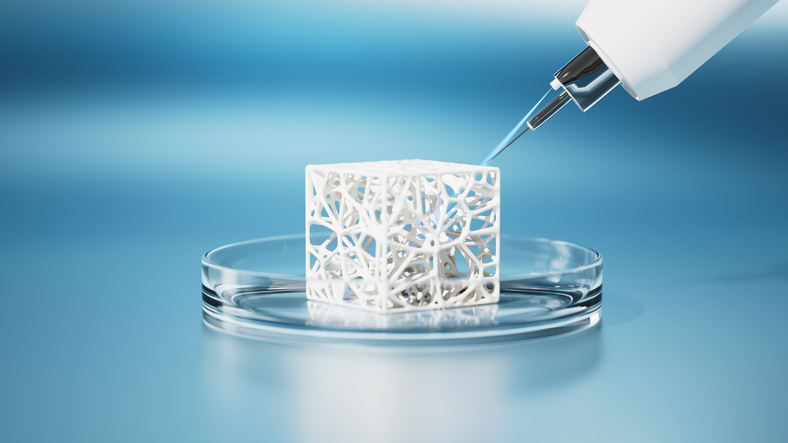


A review of how isothermal microcalorimetry can advance biomaterial scaffold characterization
Biomaterial scaffolds play a central role in regenerative medicine, supporting cell growth and tissue formation in applications ranging from wound healing to bone regeneration. However, understanding how host cells and microorganisms interact with these materials remains a critical challenge. Traditional characterization methods often rely on endpoint measurements or destructive analyses, making it difficult to observe biological processes as they unfold.
A compelling review by Carmen Álvarez-Lorenzo and Ángel Concheiro at Universidade de Santiago de Compostela, Spain, highlights the growing importance of isothermal microcalorimetry (IMC) in the design and characterization of scaffolds for regenerative medicine.
The authors provide a clear, well-structured overview of how IMC can be used to study antimicrobial activity of coated scaffolds, monitor bacterial and host-cell interactions, detect early infection and biofilm formation, and assess the physicochemical stability of biomaterials.
KEY HIGHLIGHTS
The review underlines IMC as a powerful yet underused tool, offering several key advantages:
- High sensitivity and versatility, enabling real-time detection of heat flow from virtually any biological or chemical process—from bacterial growth to scaffold degradation
- Non-destructive, label-free measurements, allowing samples to remain intact for further analysis
- Minimal sample preparation, with reliable detection even in opaque liquids or on solid biomaterials
- Direct quantification of antimicrobial effects and biofilm formation on medical devices or tissue scaffolds
As with all technologies, there are limitations and the review also discusses these and strategies to address them, including the importance of optimized experimental setups, standardized protocols, and when needed combining IMC with complementary analytical methods.
Other notable studies highlighted using the calScreener include work on fracture-related infections and biofilm formation on implants (Cichos et al., 2022; Scheper et al., 2021; Top Hartmann et al., 2024). Together, these studies reinforce IMC’s potential as a fast, reliable alternative to conventional microbiological assays.
Learn more
Read more about biofilm testing with calScreener biocalorimeter and clinical research using biocalorimetry.