DEVELOPING NEXT-GENERATION STERILITY TESTING
The caloTrace detection system utilizes highly sensitive isothermal microcalorimetry (IMC) technology, detecting the heat released by viable microorganisms with exceptional sensitivity.
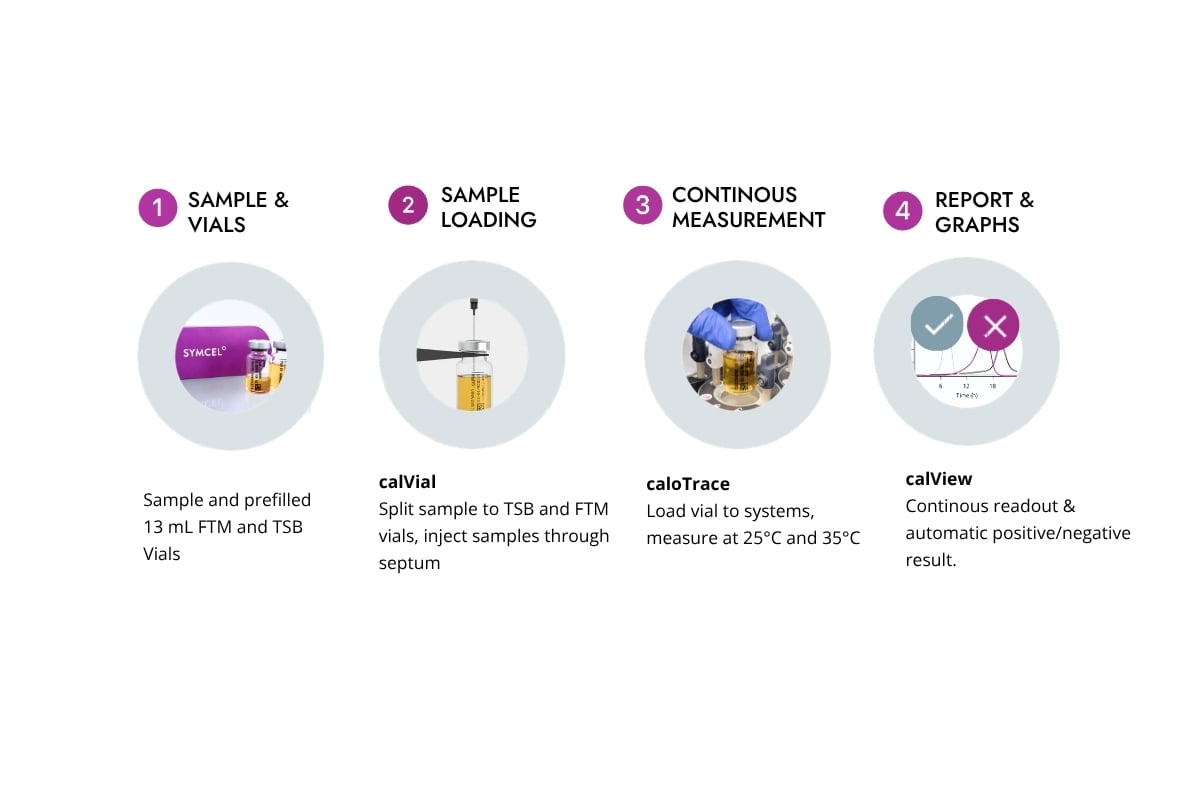
There is no need for reagents, filtration, lysis, or other disruptive sample preparation steps. Even complex cell therapy samples can be tested through direct inoculation into sealed 13 mL vials containing TSB and FTM media.
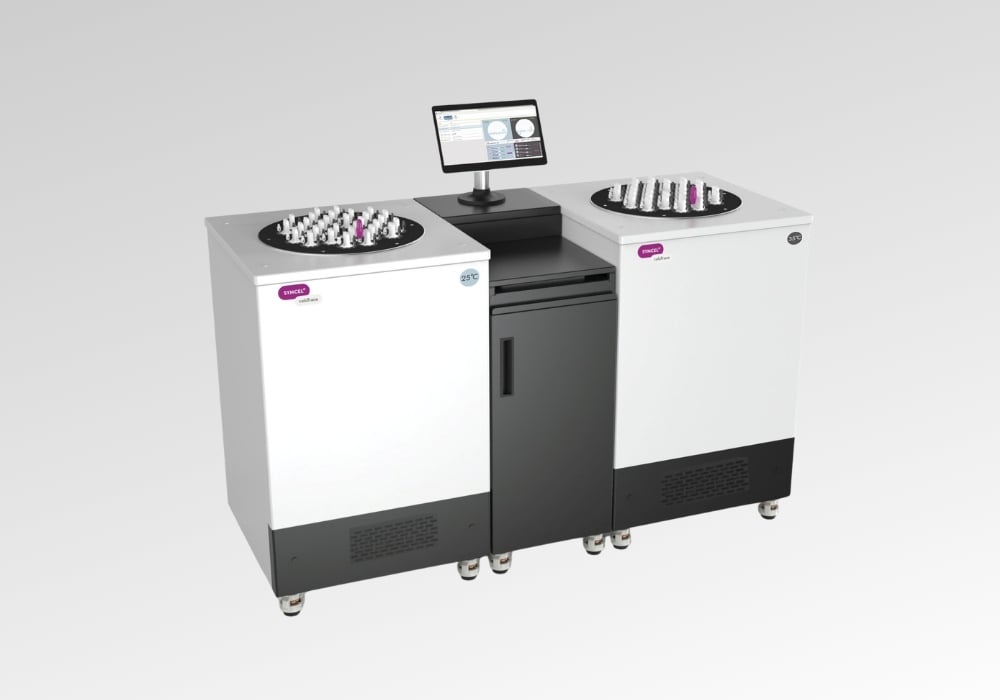
The system operates from 20 to 40°C, with a standard configuration comprising two units: one set to 20–25°C and one to 30–37°C, enabling detection of aerobic and anaerobic microorganisms in alignment with compendial methods.
OVERCOMING THE CHALLENGES IN STERILITY TESTING OF CELL AND GENE THERAPIES
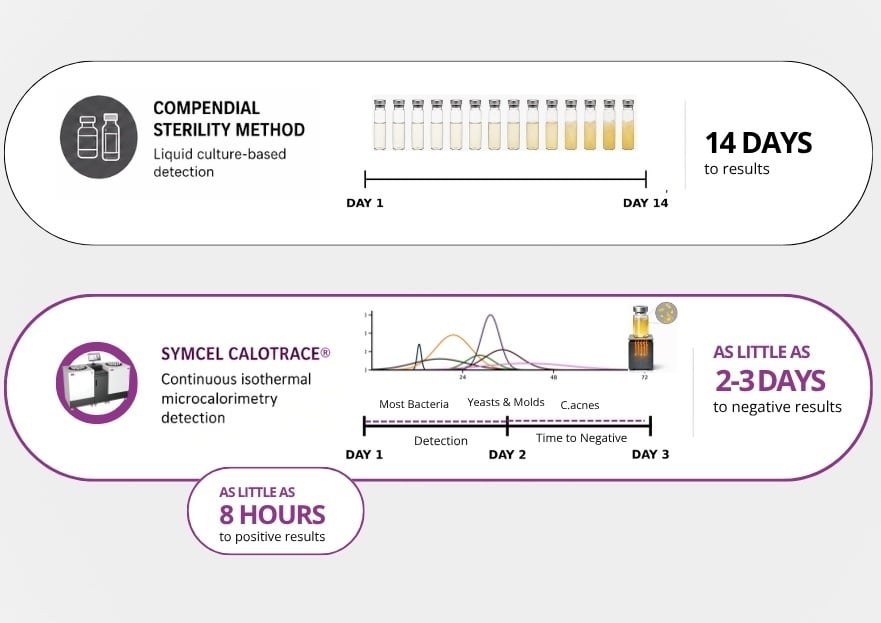
Sterility testing remains a major bottleneck in the release of cell and gene therapies and other advanced therapy medicinal products (ATMPs). Traditional sterility testing methods require up to 14 days, with alternative rapid microbial methods increasingly gaining acceptance from regulatory authorities.
Combining rapid and reliable results with ease of use remains, however, a challenge. The caloTrace Sterility Testing System is developed to overcome these challenges, combining growth-based testing, non-destructive direct inoculation, volume flexibility, continuous monitoring and rapid time to results.
STRATEGIC R&D COLLABORATION WITH JOHNSON & JOHNSON
Symcel and Johnson & Johnson have entered an R&D collaboration with the aim of delivering a validated, GMP-compliant test that cuts release time to under 3 days, improving manufacturing efficiency and enabling faster access for patients.
.jpg?width=1200&height=628&name=Announcement%20(84).jpg)
CONTINUOUS HIGH-SENSITIVITY MICROBIAL DETECTION
Release times are critical for life-saving therapies. The high sensitivity of IMC allows many microorganisms to be detected in just a few hours, while continuous real-time monitoring eliminates the need to wait for the full test cycle to finish — contamination is automatically flagged as soon as it is detected.
C. acnes is often a rate-limiting microorganism in growth-based methods. However, due to its high metabolic heat production, caloTrace can detect it in as little as 48 hours, enabling time-to-negative sterility testing in under 3 days:
-
Reduce vein-to-vein times
-
Improve operational efficiency and product safety
-
Respond faster to contamination events
Streamlined workflow aligned with compendial methods
The caloTrace supports sterility testing workflows aligned with regulatory guidelines. Samples are directly inoculated into prefilled 13 mL vials containing compendial TSB and FTM media and incubated at 25 °C and 35 °C. Testing is non-destructive and requires no sample manipulation, filtration, lysis, or interfering reagents. If a sample is found to be positive, the inoculated vial can be immediately subjected to further analysis using standard methods.
30+30 INDEPENDENT HIGH-SENSITIVITY CHANNELS
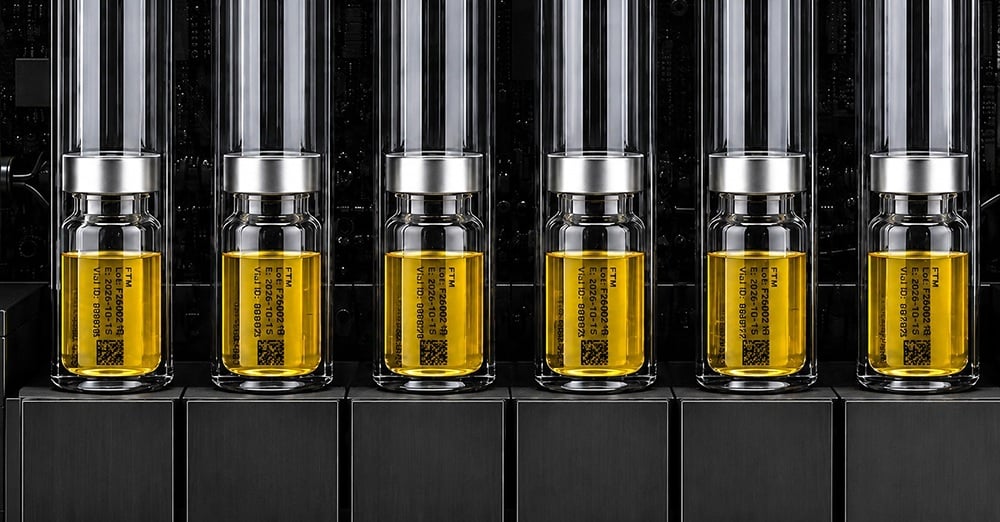
Featuring 30 independent isothermal calorimetric channels per temperature, equipped with high-performance heat flow detectors, the caloTrace is designed for stable and reliable operation. Each detection unit contains a built-in reference and no integrated moving parts, ensuring long-term reliability while minimizing the risk of downtime.
Unlike systems that rely on multiple secondary optical measurements, the caloTrace provides a more direct and rapid microbial detection method unaffected by sample viscosity or variability in optical clarity:
-
1 CFU limit of detection
-
High-sensitivity detection of only viable microorganisms
-
Random-access testing
AUTOMATING MICROBIAL TESTING
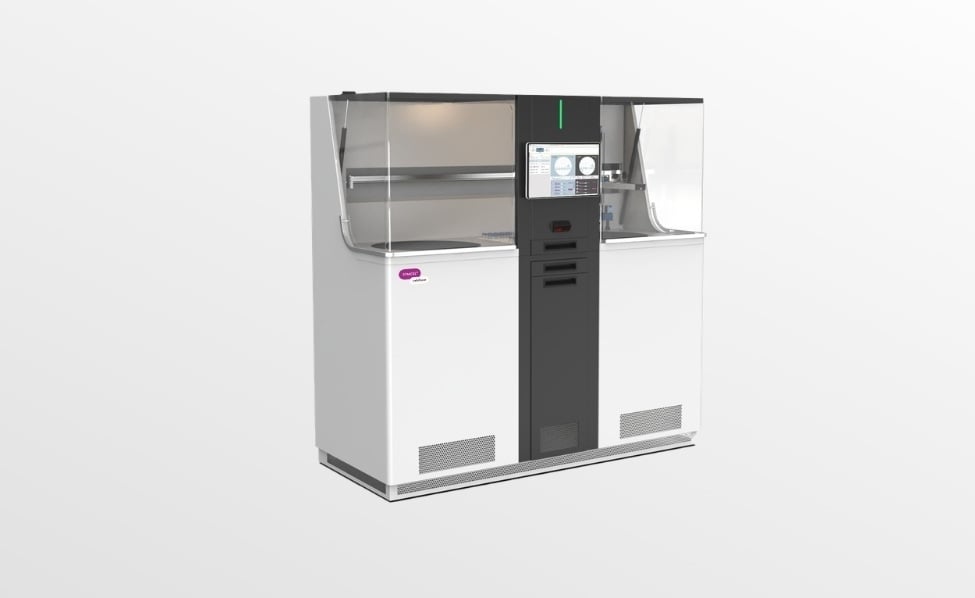
The caloTrace Sterility testing system is being developed in both manual and automated configurations. The automated version is designed to enable operators to simply place inoculated calVials into a loading rack, after which the system automatically identifies, loads, and monitors each sample.
Unique vial IDs, batch numbers, and scannable data matrix codes provide full traceability throughout the testing process while minimizing manual handling. The automated sample handling module will be available as an upgrade option. The core system stays the same.
PREFILLED VIALS WITH TSB AND FTM MEDIA
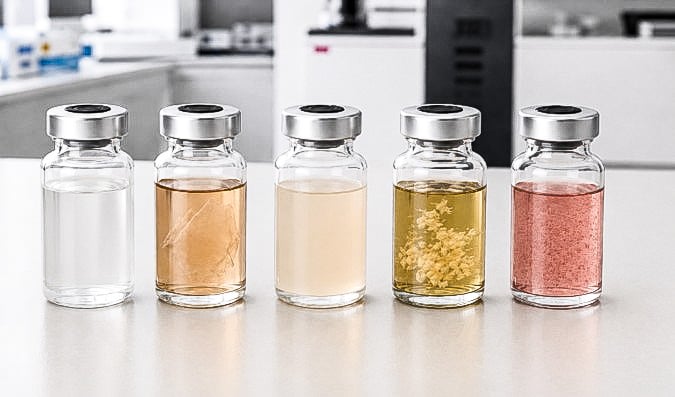
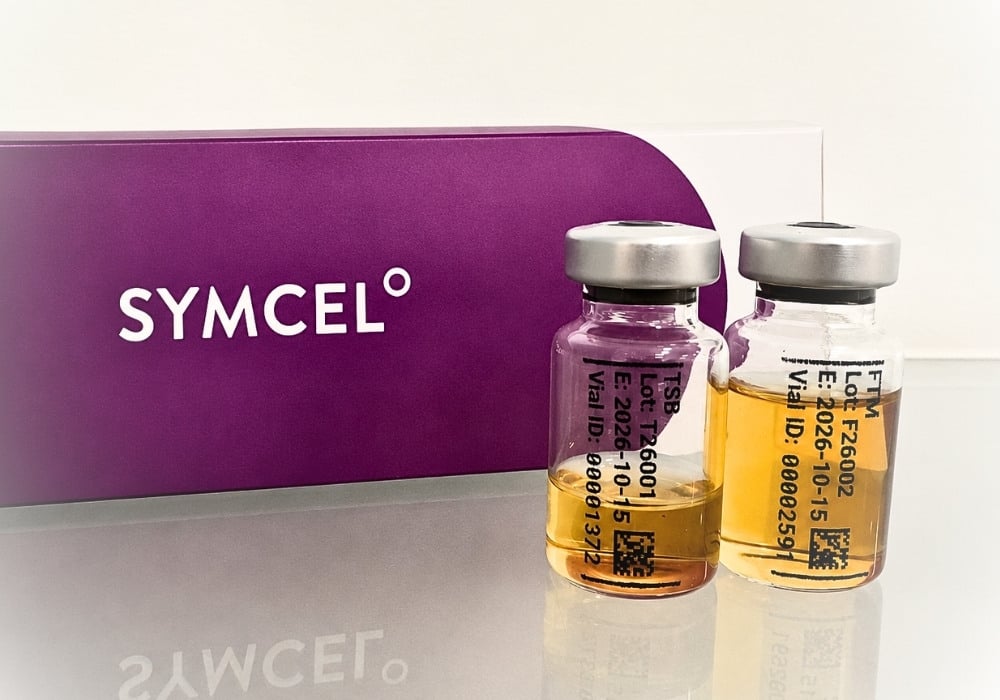
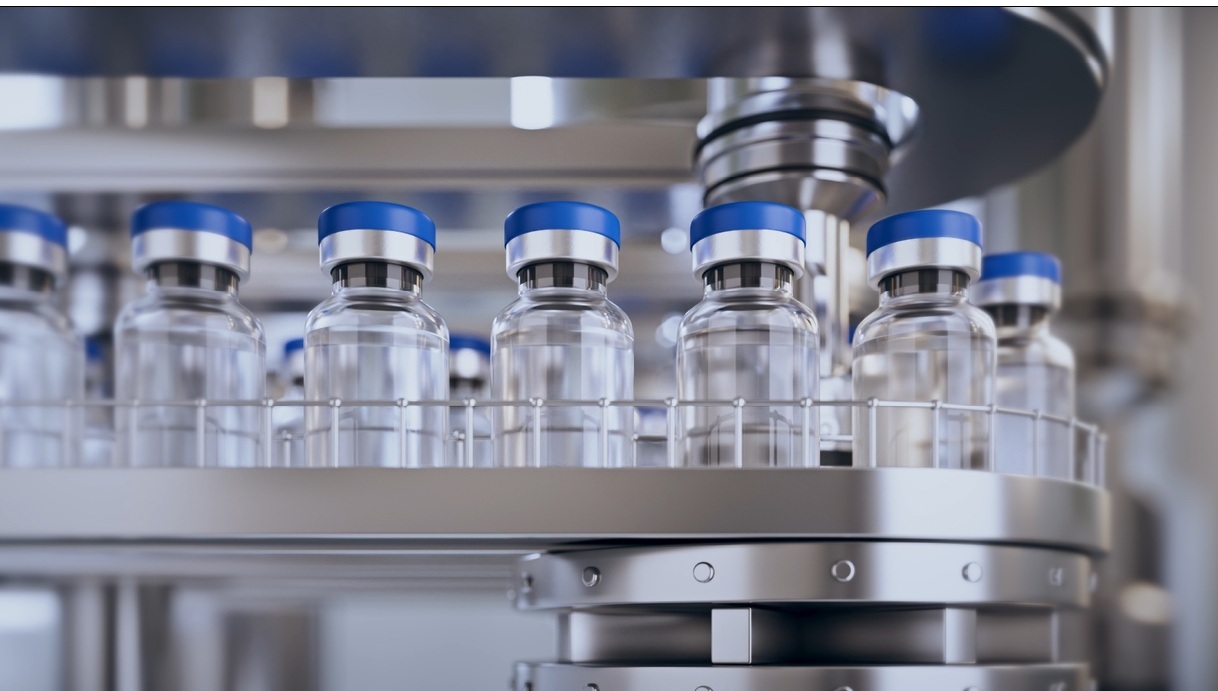
Measurements are performed in sterile 13 mL calVials™, prefilled with Tryptic Soy Broth (TSB) and Fluid Thioglycollate Medium (FTM) to support sterility testing workflows aligned with compendial methods. The dual-media approach enables detection of a broad range of microorganisms, with TSB supporting aerobic bacteria, yeasts and moulds, and FTM supporting both aerobic and anaerobic microorganisms.
The sterile, sealed, barcode-labelled vials support direct sample inoculation through a septum, minimising handling steps, reducing the risk of secondary contamination, and enabling full sample traceability.
calView
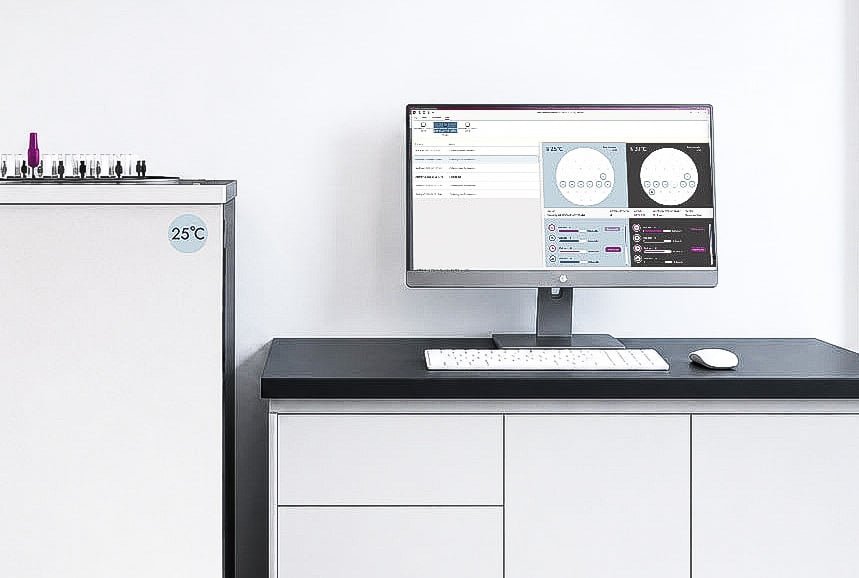
The calView® software interface streamlines the entire workflow—from sample entry to result reporting. It allows real-time monitoring of all measurements and offers flexible data visualization, from full experiment overviews to individual sample curves.
Once the experiment is complete, positive/negative results are provided automatically, and detailed reports including data from multiple experiments can be generated or exported for further analysis. The system supports 21 CFR Part 11 data integrity requirements with audit logs, user roles, and secure electronic documentation.
ADVANCING STERILITY TESTING OF BIOLOGICS AND VACCINES
Earlier release of biologic pharmaceuticals and vaccines can reduce production costs, ease logistical challenges, and ultimately save lives. The caloTrace® platform is being developed to support a broad range of pharmaceutical applications, and as part of a grant awarded by the Coalition for Epidemic Preparedness Innovations (CEPI), Symcel is developing a rapid sterility testing method aimed at enabling release testing of vaccines in under three days.
VALIDATION AND REGULATORY
The caloTrace Rapid Microbial Method (RMM) id designed to follow the US and EU standards USP <1223> , USP<1071>, PDA TR 33, Ph. Eur. 5.1.6 and Ph. Eur. 2.6.27. Primary validation is ongoing and includes studies on the limit of detection (LOD), comparability, specificity, ruggedness, and robustness.
The test assay is aligned with compendial sterility methods, using the same media and incubation temperatures. The performance of calScreener+, which is based on the same measurement technology, has been evaluated against the compendial USP <71> sterility test using a broad panel of microorganisms.
Contact us at sterility@symcel.com to discuss your application and receive a presentation of the latest data.

Demo and feasability testing
We have opend evaluation and validation studies where users can assess the performance and suitability of the platform for their products. This can be done by sending samples to our laboratory at the Karolinska Institute premises in Stockholm, or by evaluating a system on-site.
This enables pharmaceutical and advanced therapy developers to evaluate the platform using products and in-process samples, ensuring robust performance across their products while optimising workflows, data management, and system integration to meet their specific requirements.