The future of phage therapy demands better measurement
Phage therapy offers precision targeting against antimicrobial-resistant or tolerant bacteria. However, phage development is complex. Traditional workflows rely on plaque assays, optical density measurements, and manual host-range mapping. These methods are generally reliable, but they are labor-intensive and largely endpoint-driven.
As phage programs expand to include larger libraries, multiple clinical isolates, biofilm models, and combination therapies, scalability becomes both a scientific and operational challenge. At the same time, bacteria in real infections behave differently than laboratory strains. Phenotype shifts, biofilm formation, and environmental stress influence phage susceptibility. Selecting candidates under simplified conditions may not reflect clinical reality.
The Symcel calScreener® and calScreener+ continuously monitors microbial metabolic activity, enabling earlier detection of phage activity and more scalable screening across bacterial strains and conditions.
PHAGE TESTING WITH BIOCALORIMETRY
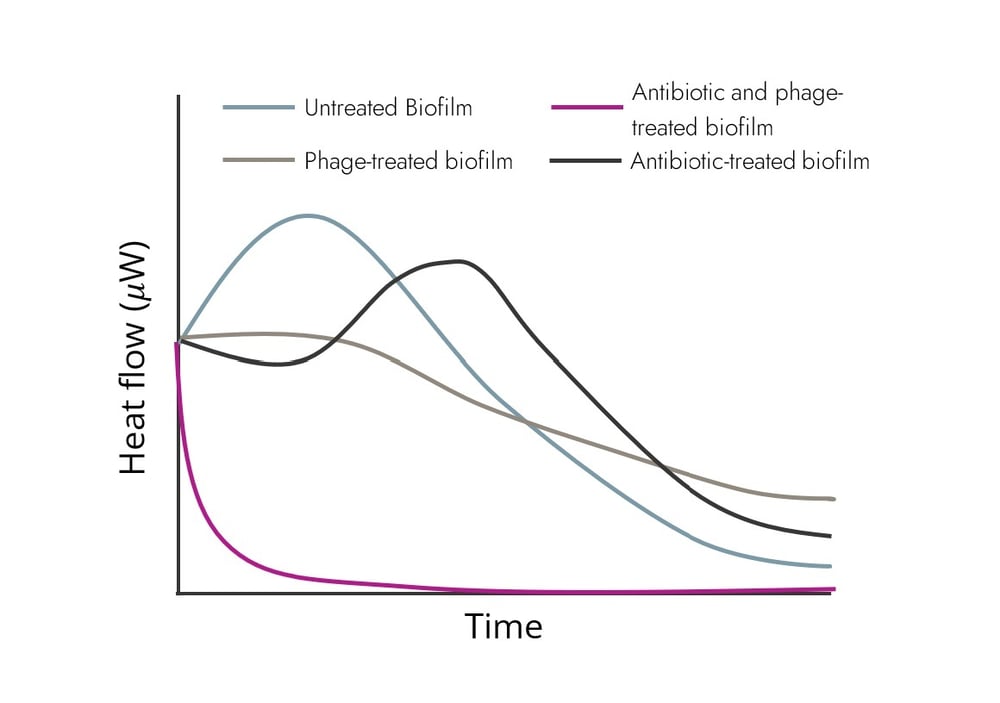
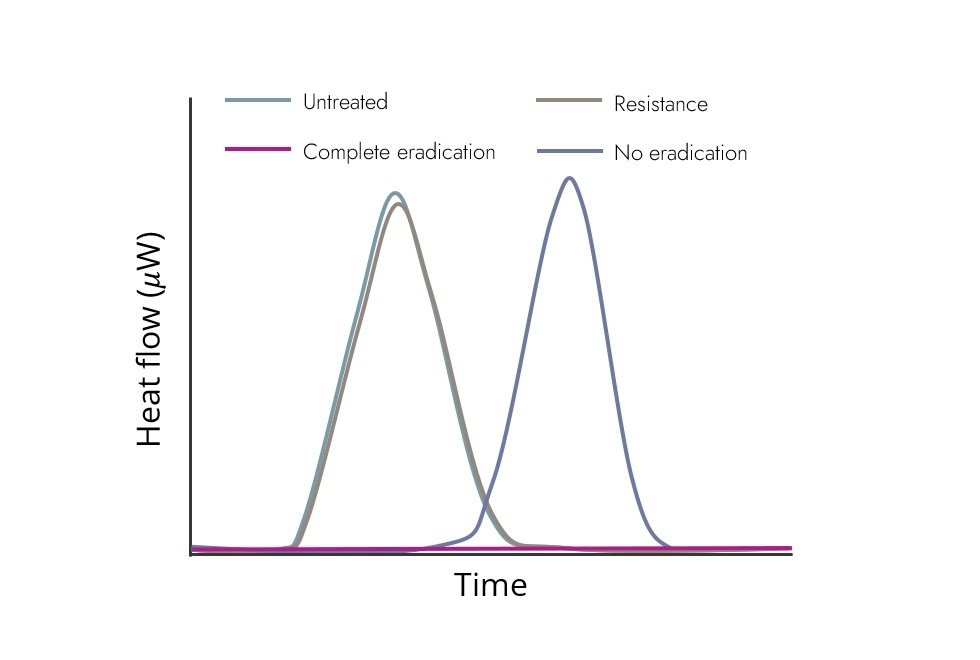
Isothermal microcalorimetry measures metabolic heat, which directly reflects bacterial viability. When bacteria are exposed to phages, suppression of metabolic activity can be detected in real time. Kinetics matter, as the speed and durability of suppression influence translational success. Instead of relying solely on plaque formation or turbidity loss, using the calScreener you can:
- Continuously monitor killing kinetics
- Quantitatively compare MOIs
-
Detect delayed regrowth or resistance
-
Differentiate strong and weak candidates early
FASTER AND MORE EFFECTIVE SCREENING
Plaque assays remain foundational, but scaling them across dozens of phage–host combinations rapidly increases labor and cost. With the calScreener, bacteria and phages are combined directly in sealed ampoules and monitored automatically. Multiple conditions can be tested in parallel without increasing hands-on workload.
TESTING IN CLINICALLY RELEVANT SYSTEMS
Bacteria in biofilms, sputum-like media, or nutrient-limited environments present phenotypes that differ from standard lab cultures. Biocalorimetry allows evaluation directly in complex and opaque systems, preserving biological context while continuously monitoring metabolic activity. Context-aware screening reduces translational risk and strengthens confidence in candidate selection.